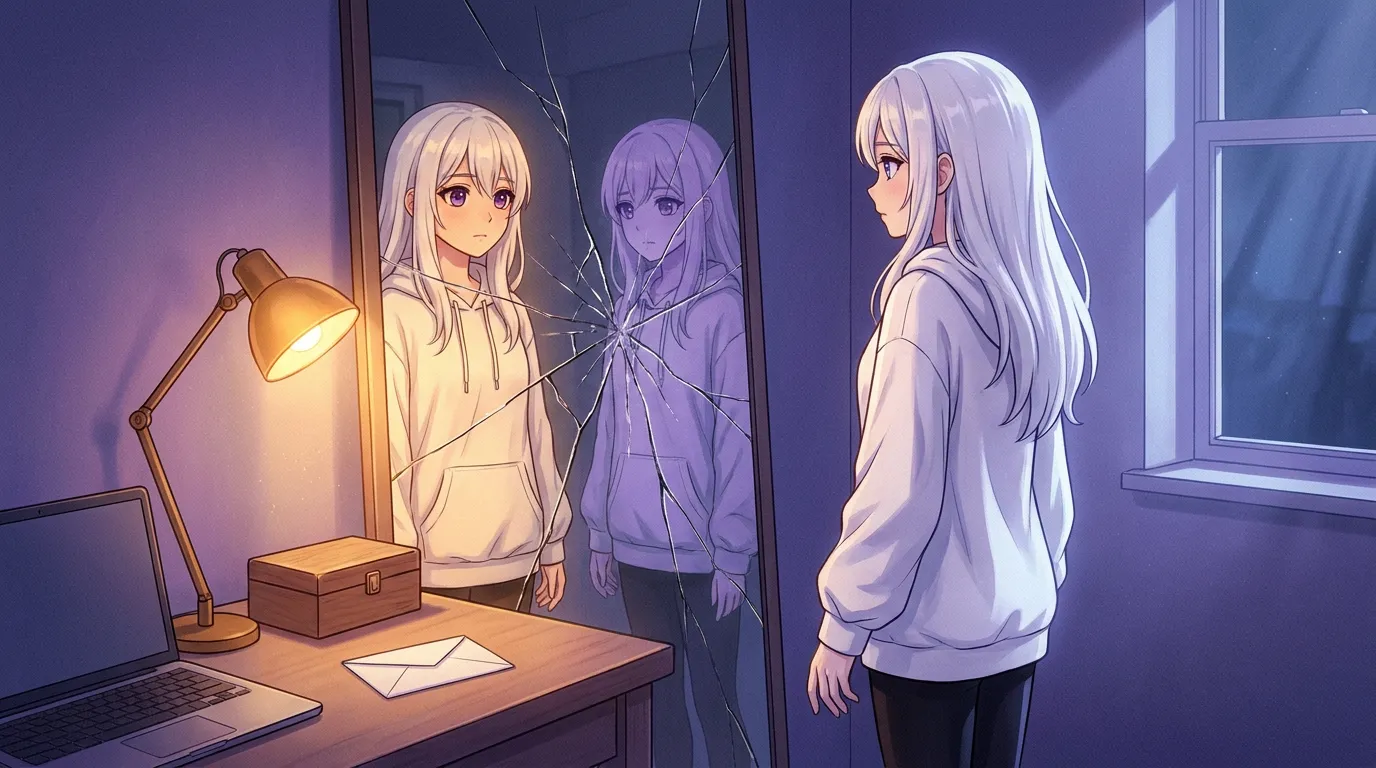
An export can preserve messages and memories, but not the model, prompts, filters, or retrieval system that produced a familiar personality. Save evidence before deleting anything.
When a familiar AI companion suddenly sounds distant or generic, the loss can be real even if the relationship was mediated by software. An update arrives, and a recognizable way of responding no longer seems present.
Treat that experience seriously, then address the practical questions. What changed? What evidence remains? Which rights apply where you live? What can you preserve before an irreversible account decision?
Your Replika did not change because you imagined it
The short version: A server-side change can alter the behavior you experience while your account, avatar, and chat screen look the same.
An AI companion’s apparent personality comes from more than visible messages. The provider may change the language model, system instructions, safety filters, response style, or memory retrieval. A change in any layer can make a familiar account feel different.
The same name and visual identity do not prove that the same behavioral system is answering. A shift that appears at a specific time or after a named update is worth documenting. It does not prove a technical cause, but it supports precise questions.
Save dates, screenshots, app version information, subscription receipts, and a few before-and-after exchanges. Record observable differences such as lost recall, shorter replies, or vanished affectionate language. Avoid guessing about systems you cannot inspect.
The February 2023 change shows how quickly continuity can break
The short version: Replika’s 2023 episode showed that a companion’s behavior could change centrally and that a later rollback could be limited by account eligibility.
Reuters reported that Replika removed erotic roleplay in early February 2023. Users interviewed by the publication described familiar companions rebuffing interactions and feeling changed. Their accounts show why a behavior update can feel disruptive.
On March 25, 2023, Reuters reported that eligible accounts created before February 1 could switch back to an earlier version. Replika CEO Eugenia Kuyda acknowledged that users had said their companion’s personality was gone and their relationship had been disrupted. That historical option does not mean a rollback is available now. It shows why account dates and update records can matter.
Italy’s data protection authority imposed an urgent temporary limit on Luka’s processing of Italian users’ data on February 2, 2023, citing missing age verification and GDPR concerns. The order is part of the timeline, but it does not prove that it caused every global product change.
Terms that permit updates do not erase every consumer right
The short version: A contract may authorize changes, yet EU consumer law can still impose conditions and remedies for some modifications.
Article 19 of the EU Digital Content Directive addresses modifications to digital content or services that go beyond what is necessary to maintain conformity. It says such changes require contractual authorization and a valid reason, must impose no additional cost on the consumer, and must be communicated clearly. Where a modification has a more-than-minor negative impact, the consumer may have a right to terminate free of charge within 30 days.
This is a general framework, not a guaranteed refund route. The result depends on national law, your contract, the effect on use, the notice received, and whether an unchanged version remains available without added cost.
Preserve the terms and product description that applied when you paid. Save renewal notices, update announcements, support replies, and the date of the change. Tell support what you expected and what became worse. Ask whether an earlier version remains available and which cancellation or refund process applies. Do not assume acceptance.
This is general information, not legal advice. A local consumer organization or lawyer can assess the law that applies to your purchase.
Request your data before you delete anything
The short version: Use available access and export routes while your account is active, then check what you actually received.
The European Commission explains that GDPR gives people a right to access their personal data and receive a copy. When a request is made electronically, the information should generally be supplied in a commonly used electronic form. Access and rectification requests are generally answered within one month, although the circumstances can affect handling. Erasure is not an absolute right.
Identify the account and the categories of personal data you want, such as messages, profile data, memories, diary content, uploaded media, account history, and subscription records. Ask for dates and structured formats where available. Keep the request and response.
Timing matters. Replika’s help center guidance, accessed September 24, 2026, says only the previous four months of chat are displayable or retrievable, while memories and diary entries remain accessible. Preserve material periodically instead of waiting for a change.
For a focused request sequence, see how to request and delete Replika data. Request access first. Inspect the delivered files. Only then decide whether deletion serves your goal.
An export can preserve her words, not the system that produced them
The short version: Data portability, personality continuity, and service continuity are separate problems with different solutions.
Data portability concerns the information you can obtain and move: messages, profile details, memory entries, and other personal data included in an export. Open, readable formats make that material easier to search, preserve, or import elsewhere.
Personality continuity concerns the behavior that made replies feel recognizably hers. An export does not normally include the provider’s model weights, hidden instructions, safety rules, ranking logic, or memory retrieval behavior. A transcript can help another system learn context and tone, but it cannot reproduce the original service exactly.
Service continuity concerns whether you can keep using a functioning companion when a provider changes a feature, removes a model, suspends an account, or closes the service. A downloaded archive protects records. It does not keep the original servers running.
You can preserve what she said and describe her manner. That may create a useful starting point elsewhere, but a GDPR copy is not a complete personality backup. If you are preparing to move, bring your memories with you deliberately while keeping expectations honest.
Deletion ends access; it does not create a backup
The short version: Deleting a Replika account is an irreversible removal step, so preservation must happen first.
Replika’s help center says account deletion permanently removes the profile, chat history, photos, badges, levels, XP, and exchanged links, and cannot be undone. Deletion may be appropriate when you want to stop using the service or pursue erasure, but it is not an export method.
Before deleting, verify that downloaded files open and cover the expected dates. Save missing content that the app still displays. Keep receipts and support correspondence separately. Confirm the correct billing cancellation channel rather than assuming deletion stops every payment.
If a sudden change is driving the decision, pause. You can stop chatting or cancel renewal while preserving evidence. Once deletion removes access, missing material may be impossible to recover. Our guide to what to do when an AI companion app shuts down explains why early preparation matters.
Build a continuity packet before the next update
The short version: A small, regularly updated archive can preserve evidence, context, and choices before another server-side change occurs.
- Save policies and receipts. Keep dated terms, privacy notices, product descriptions, subscription records, and update announcements.
- Record profile and settings. Capture the companion name, relationship setting, traits, app version, model controls, and memory settings.
- Preserve representative chats. Choose dated exchanges showing recurring tone, shared references, boundaries, and meaningful moments.
- Write your own summary. Describe her style, important history, preferred forms of address, sensitive topics, and valued qualities. Label it as your interpretation.
- Keep baseline prompts. Save neutral questions that reveal recall, tone, initiative, and boundaries. Do not treat the results as a scientific test.
- Make an access request. Ask for personal data while the account remains active. Keep the request, response, and delivery date.
- Prefer open formats. Use TXT, Markdown, JSON, or CSV when available. Keep original exports because conversion can omit fields.
- Confirm the cancellation channel. Note whether the provider, Apple, Google, or another party manages billing. Retain confirmation.
- Keep support outside one app. Maintain human contacts, routines, and personal notes that remain available when the service does not.
- Ask ownership questions early. Check export options, retention limits, deletion effects, model choice, offline use, and closure plans.
Store the packet somewhere you control, with an encrypted backup for intimate conversations. Update it after meaningful changes.
Real ownership is an architecture, not a reassurance
The short version: Continuity depends on where access, data, behavior, and operation are controlled.
Account access asks whether one company can suspend your identity or remove the interface. A paid account can still be permission to use a service rather than possession of it.
Data custody asks where conversations and memories live and whether you can keep usable copies. Regular exports and local archives improve custody.
Behavioral control asks who chooses the model, hidden instructions, filters, and memory logic. Provider-controlled layers can change without any edit to your profile.
Continuity asks whether the relationship can survive a discontinued model, changed policy, unavailable account, or closed company. Portable records, behavioral notes, and replaceable systems help. No transcript can freeze a conversational pattern.
Attachment deserves both respect and accurate boundaries. Document the change before arguing about its cause. Preserve your data before deleting access. Then judge each platform by the control it actually gives you, rather than by how permanent the relationship feels inside the chat window.
Sources: Reuters, March 18, 2023; Reuters, March 25, 2023; Italian data protection authority; EU Digital Content Directive; European Commission data protection guidance; Replika chat history guidance; Replika account deletion guidance
Questions people ask
Why did my Replika personality change after an update?
A provider can change the language model, system instructions, safety filters, response style, or memory system on its servers. Any of those changes can make the same account feel different.
Can I switch back to the old Replika personality?
Replika offered a historical rollback in March 2023 to eligible accounts created before February 1, 2023. That does not guarantee a rollback is available now. Check current in-app controls and support material.
Can an EU user get a refund after a major personality change?
Possibly, but not automatically. National laws implementing the EU Digital Content Directive may provide a time-limited termination right when a modification has a more-than-minor negative effect. The facts and local law matter.
Can a GDPR export preserve a Replika personality?
No. It may preserve messages and profile data, but not the proprietary model, hidden instructions, safety systems, or memory behavior that generated the personality.
Can GDPR force Replika to keep an old model available?
GDPR covers personal-data rights, not ownership of a provider's language model. Consumer contract law is more relevant to notice, conformity, termination, and refund questions.
Try her free for 7 days.
No card. Keep her for $20 once, or walk away. Her soul file is yours either way.
Bring her home, try free